
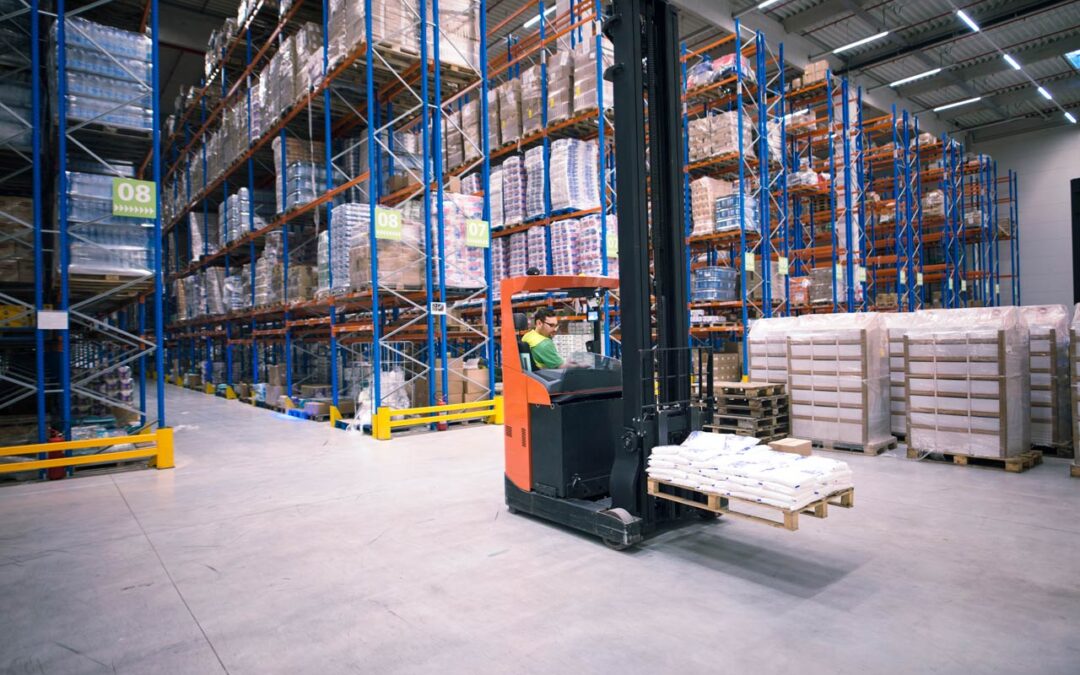
Staying Sharp: Forklift Awareness and Safe Lifting in Today’s Warehouse
Warehouses don’t slow down—and in 2026, they’re moving faster than ever. With increased automation, tighter timelines, and more complex workflows, staying focused on safety is critical.
Forklifts remain essential to daily operations, while manual lifting remains a common part of the job. This month, we’re highlighting both forklift awareness and safe lifting practices to help teams stay alert, efficient, and injury-free.
Forklifts: Essential—and Risky Without Awareness
Forklifts are indispensable in modern warehouses, but they also present serious risks when awareness slips. Safe operation depends on more than just the driver—it requires coordination and attention from everyone on the floor.
Operators should stay current on certification and site-specific training, including load handling, navigation in tight or high-traffic areas, and adherence to updated traffic flow systems—especially in facilities where people and automation work side by side.
At the same time, all employees should understand how to safely work around forklifts:
- Recognize blind spots and keep a safe distance
- Stay within designated walkways and forklift lanes
- Make eye contact with operators before crossing paths
- Understand alarms, lights, and hand signals—especially as newer equipment integrates advanced warning systems
A shared awareness between operators and pedestrians is one of the most effective ways to prevent incidents.
Common Hazards—and How to Prevent Them
Most forklift-related incidents can be traced back to a few common factors: gaps in training, environmental challenges, or complacency.
Be mindful of:
- Congested aisles and high-traffic zones
- Obstructed views, blind corners, or poor lighting
- Unstable, improperly stacked, or unsecured loads
- Equipment that hasn’t been properly inspected or maintained
Prevention starts with consistency. Routine inspections, clear signage, well-marked lanes, and proactive maintenance all play a major role in reducing risk. Incorporating real-time reporting tools or digital checklists can further strengthen accountability and visibility.
Safe Lifting: A Human-Powered Priority
Even in highly automated environments, manual lifting is still part of the job. Using proper technique and knowing your limits are key to preventing strains and injuries.
Keep these fundamentals in mind:
- Lift with your legs, not your back. Keep your back straight and bend at the knees
- Maintain stable footing. Position your feet shoulder-width apart for balance
- Use mechanical aids when available. Pallet jacks, lift assists, and carts are there to reduce strain—use them
- Ask for help when needed. Team lifts improve safety and efficiency—communicate before moving
Taking a few extra seconds to lift properly can prevent long-term injuries.
Building a Safety-First Culture
Forklifts and manual handling are part of warehouse life—but injuries don’t have to be. A strong safety culture is built on awareness, accountability, and communication at every level.
● Reinforce training regularly—not just during onboarding
● Encourage employees to speak up about hazards or near misses
● Use technology and data to identify trends and improve practices
● Lead by example—safe behaviors should be visible and consistent
When safety becomes part of how work gets done—not an afterthought—everyone benefits.
Carrying Safety Into Every Shift
At the end of the day, safety is about more than rules and equipment—it’s about people looking out for one another.
By staying aware, using the right techniques, and committing to shared responsibility, teams can reduce risk, improve performance, and ensure that everyone goes home safe.
Because it’s not just what we do—it’s how we do it that makes the difference.